Why Our Inflatable Decorations Don't Have Support Cables
know-how & innovation
An inflatable structure without guy wiresmeans, first and foremost, one less operational constraint: in a stadium or on a racetrack, every cable stretched across the ground poses a risk and takes up valuable space. Here’s how we do it without them.
The guy wire—something so obvious that we no longer question it
A three-meter-long backdrop set up at the edge of a lawn or a track—you naturally “brace” it. It’s a reflex. Four straps, four stakes, or four offset weights—and the structure holds.
Except that these four straps create a perimeter. They block the way, require marking off the area, and get torn off by people who get too close. And at venues where the ground can’t be drilled into (lawns during the season, tracks, stadium forecourts, fresh asphalt), they require offset anchors that take up even more space.
Cable support is not a technical problem. It is an operational problem: it takes up space where space is at a premium.
An inflatable set piece without guy wires: the ballast goes inside
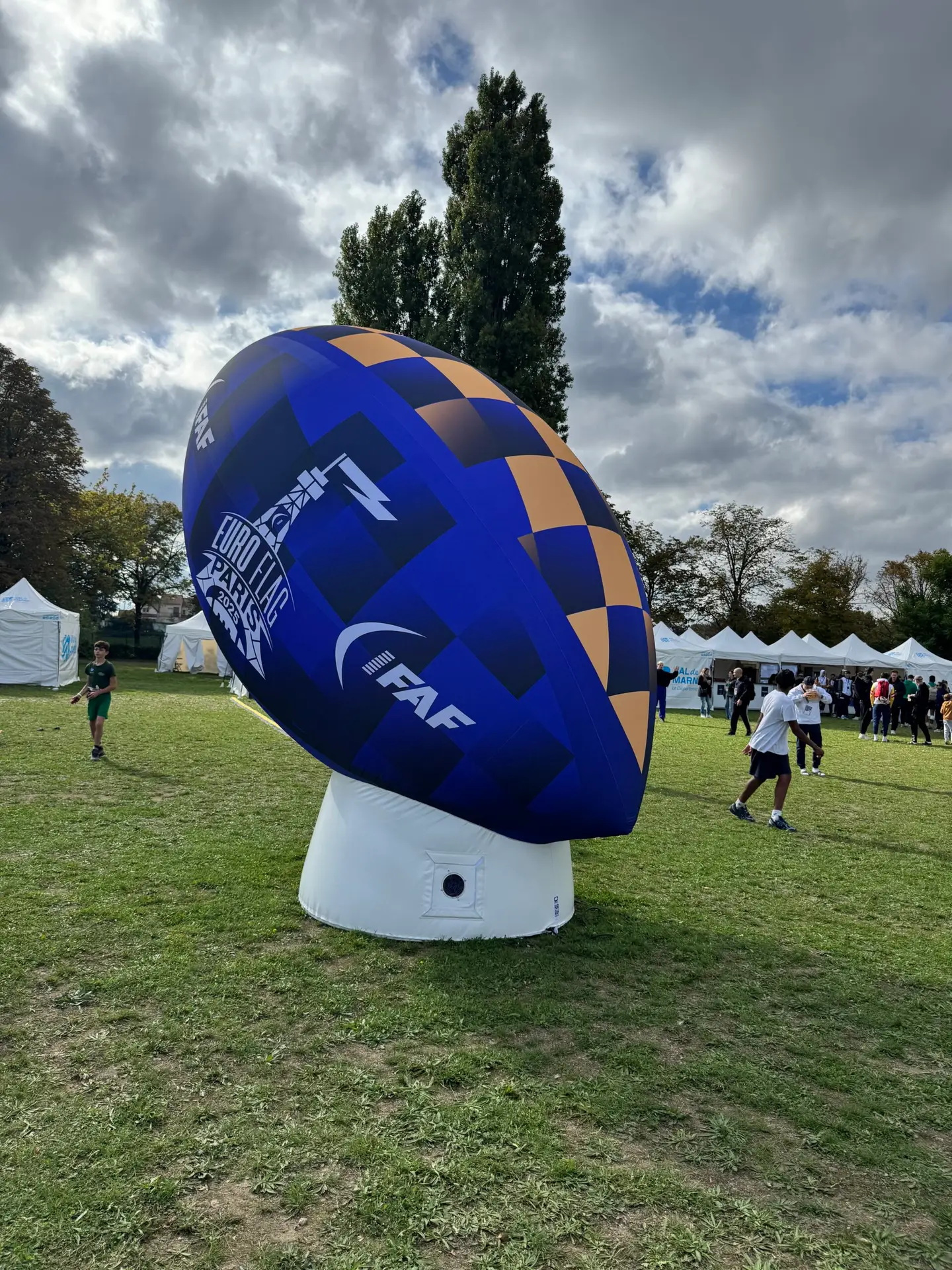
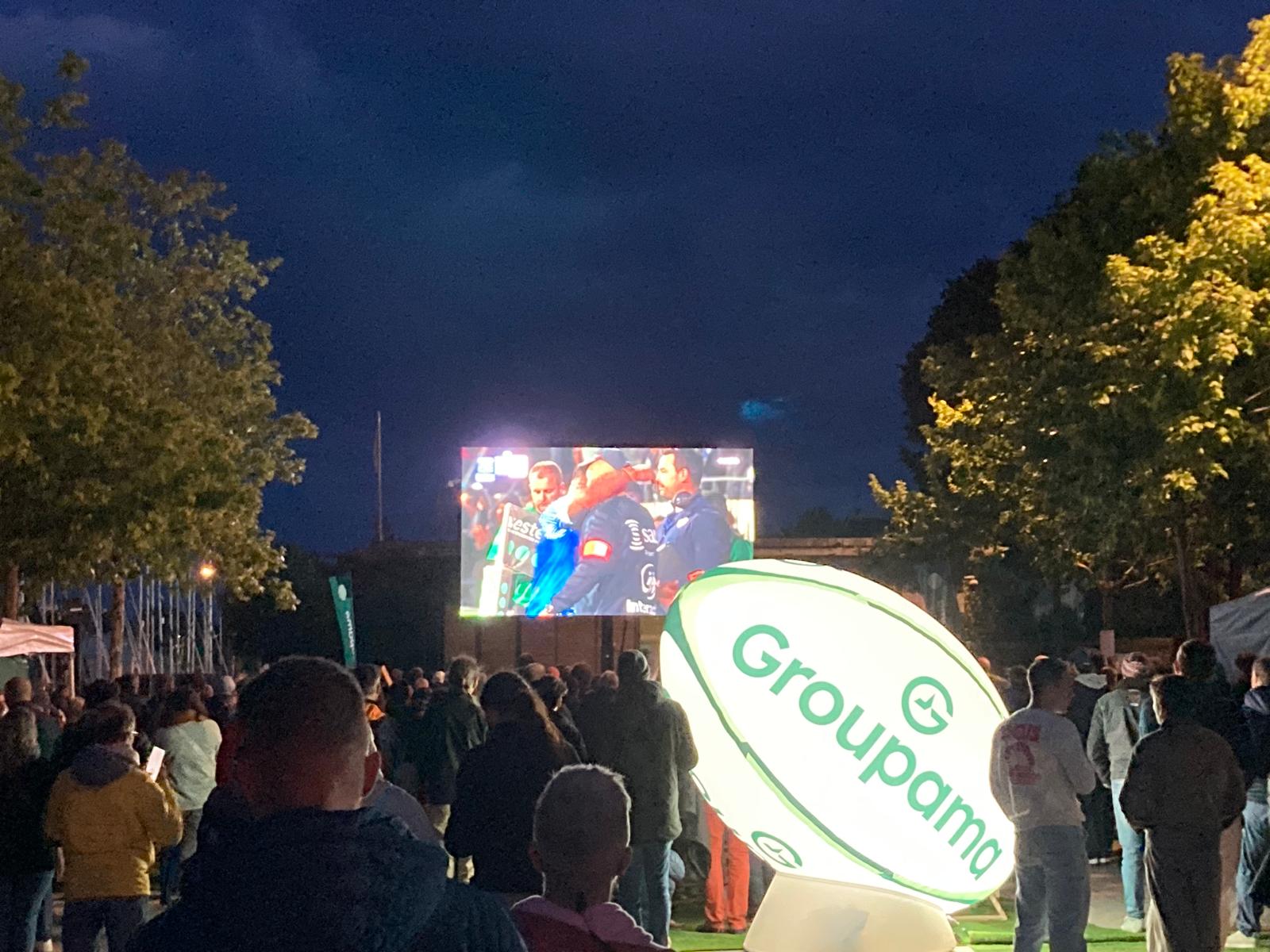
The 3-meter rugby ball delivered to the Vannes Rugby Club rests on a reinforced, waterproof, flexible PVC base that holds 80 kilograms of ballast and houses the blower and lighting. Nothing protrudes. The structure’s footprint is exactly that of the structure itself, and it requires no unsightly or dangerous guy wires for the audience.
This base changes three things at once. The set can be placed against a handrail, in a corner, or in the middle of a crowd. It can be set up and taken down by a single person. And it has no protruding parts on the legs, which is the leading cause of accidents involving event equipment.
Taking it a step further: doing without cable, too
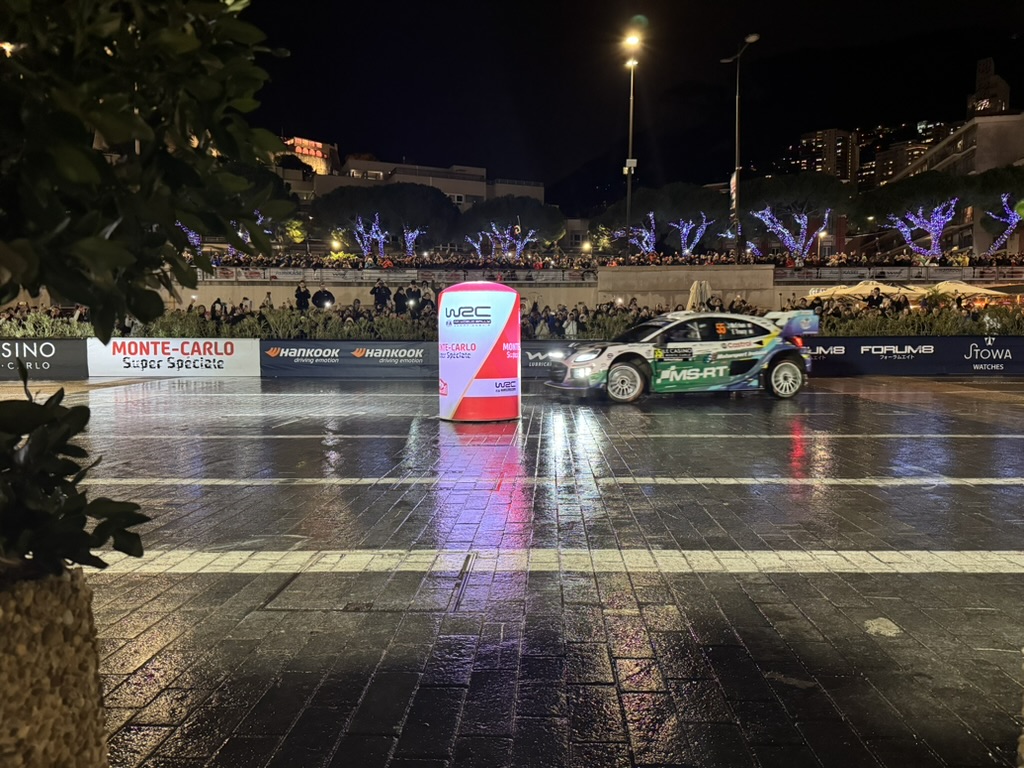
At the Monte Carlo Rally, the issue was no longer about the guy wires but about power. The structure had to be set up in the cars’ path during the super special stage. It was unthinkable to run an electrical cable right under the cars’ tires.
The solution was a fully self-contained, inflatable, backlit structure with no connection to the power grid. It’s the same principle as internal ballast, but applied to energy: everything the set needs is right there in the set.
How it performs in real-world conditions
The figures for the RCV balloon provide an indication of the scale of what is expected of a facility of this size:
– Inflates in less than a minute using a single outlet – Fan noise level of 20 decibels, which is below the threshold of human perception in a stadium – 10,000 lumens of backlighting, with color controllable via remote control – IP65 rating for electrical components – Certified for use in traffic lights, and resistant to wind and rain
That’s what allows a set to remain in place throughout an entire weekend of competition, outdoors, unattended and without any intervention.
For the organizer, the real question is
When you’re considering a design for your website, the question you should ask isn’t just “how big is it?” It’s:
– What is its actual footprint, including guy wires and counterweights? Or simply:“How much space do I actually have?” – How many people are needed to set it up and take it down? – What power source does it require, and where does the cable run? – What happens if it rains, if it’s windy, or if the audience leans on it?
On a site with space constraints—and they all do—these four factors often carry more weight than the height of the set.